 The kids today have Rick & Morty, Family Guy and Ren & Stimpy.
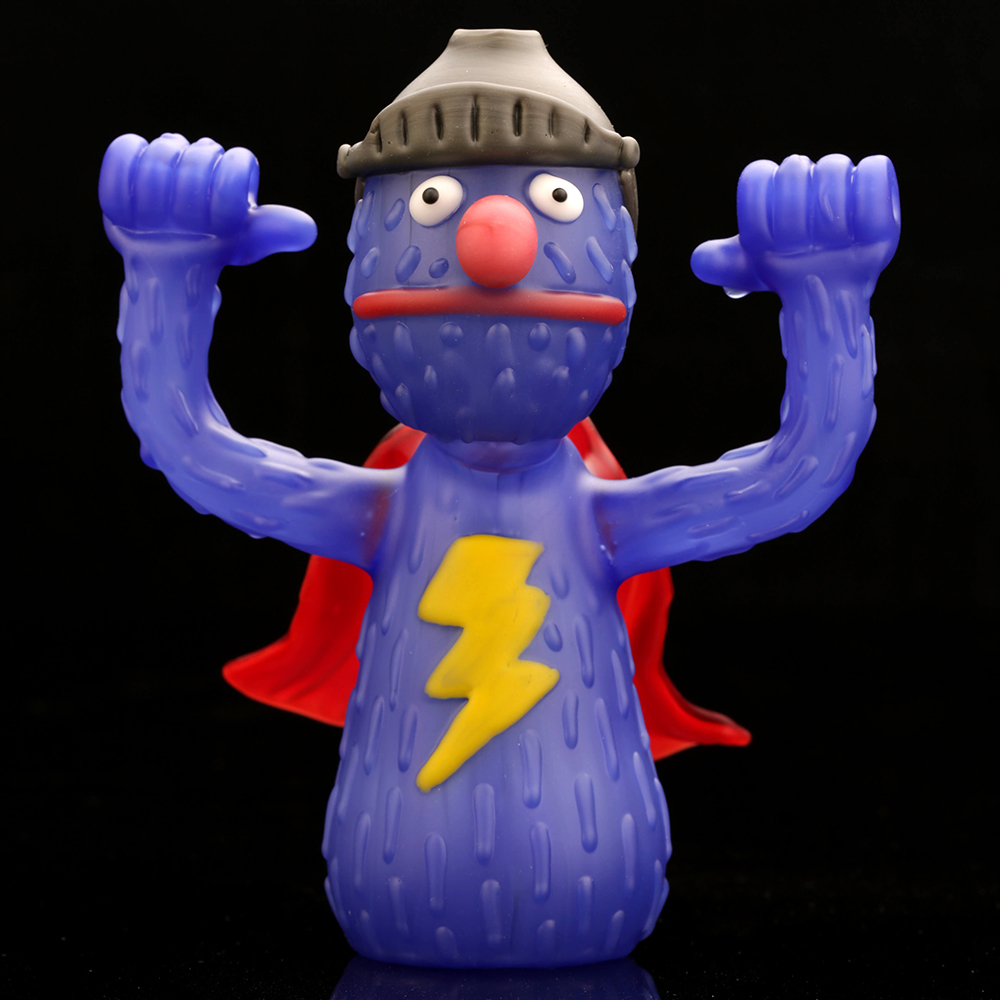
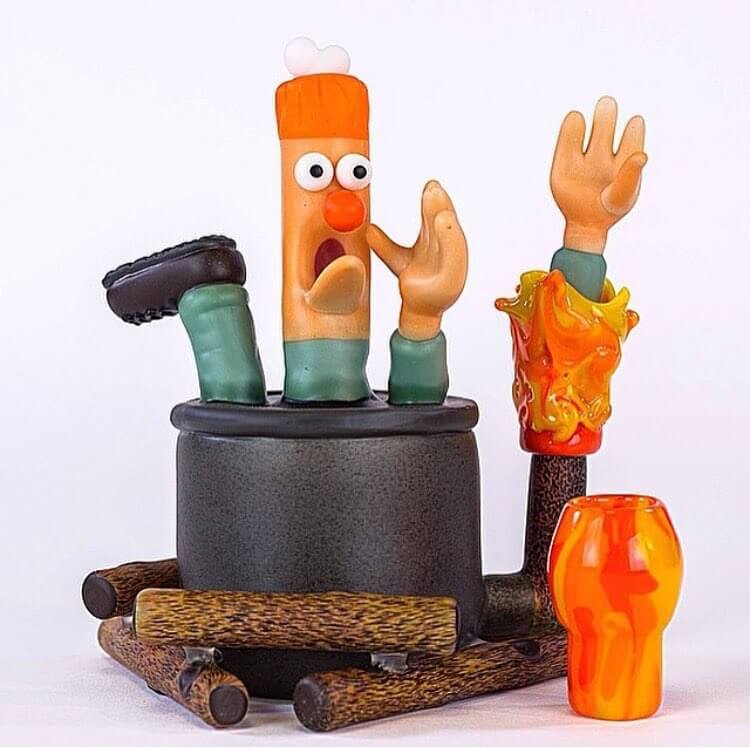
When Rob Morrison was growing up it was The Muppets and Sesame Street. As a glass artist, Morrison, 47, has transformed more than two dozen different Muppets into functional glass pieces. His favorites are Grover, Cookie Monster, Oscar the Grouch and Beaker, the long-necked lab assistant to Dr. Bunsen Honeydew.
“I always say, that they’ve already done all the marketing for me. They’re instantly recognizable and the more personal something is to you, the more universally accepted it is,” Morrison says.
“It’s kind of a contradiction, because the people that buy most of my glass are in theier twenties and thirties — they’re not Muppets people,” he adds. “Those people recognize Cookie Monster because there’s a Cookie Monster strain of weed, but still, those characters tap into that little bit of childhood innocence and happiness that everyone has.”
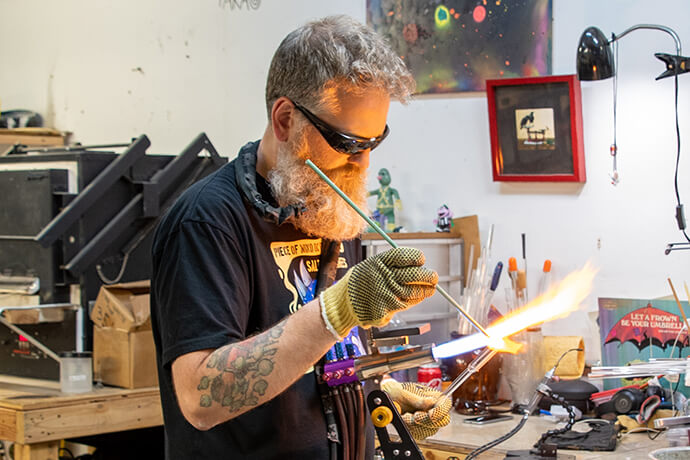
Morrison has been at the torch since the mid-nineties when he first came across a marble maker at the Oregon Country Fair. Back in those days, learning how to blow glass wasn’t as easy as watching a Youtube video. There were some books on the subject, but very few pipe makers were sharing their knowledge. Morrison picked up what techniques he could from the sidelines, and also upped his artistic game with drawing and sculpting classes at the local community college.
The Muppets became an inspiration around 2008, when out of nowhere, Morrison created a bowl slide in the shape of Grover, the cute furry, blue monster from Sesame Street. Cookie Monster and Oscar joined the parade, and Morrison quickly gained fame as the Muppet Guy.
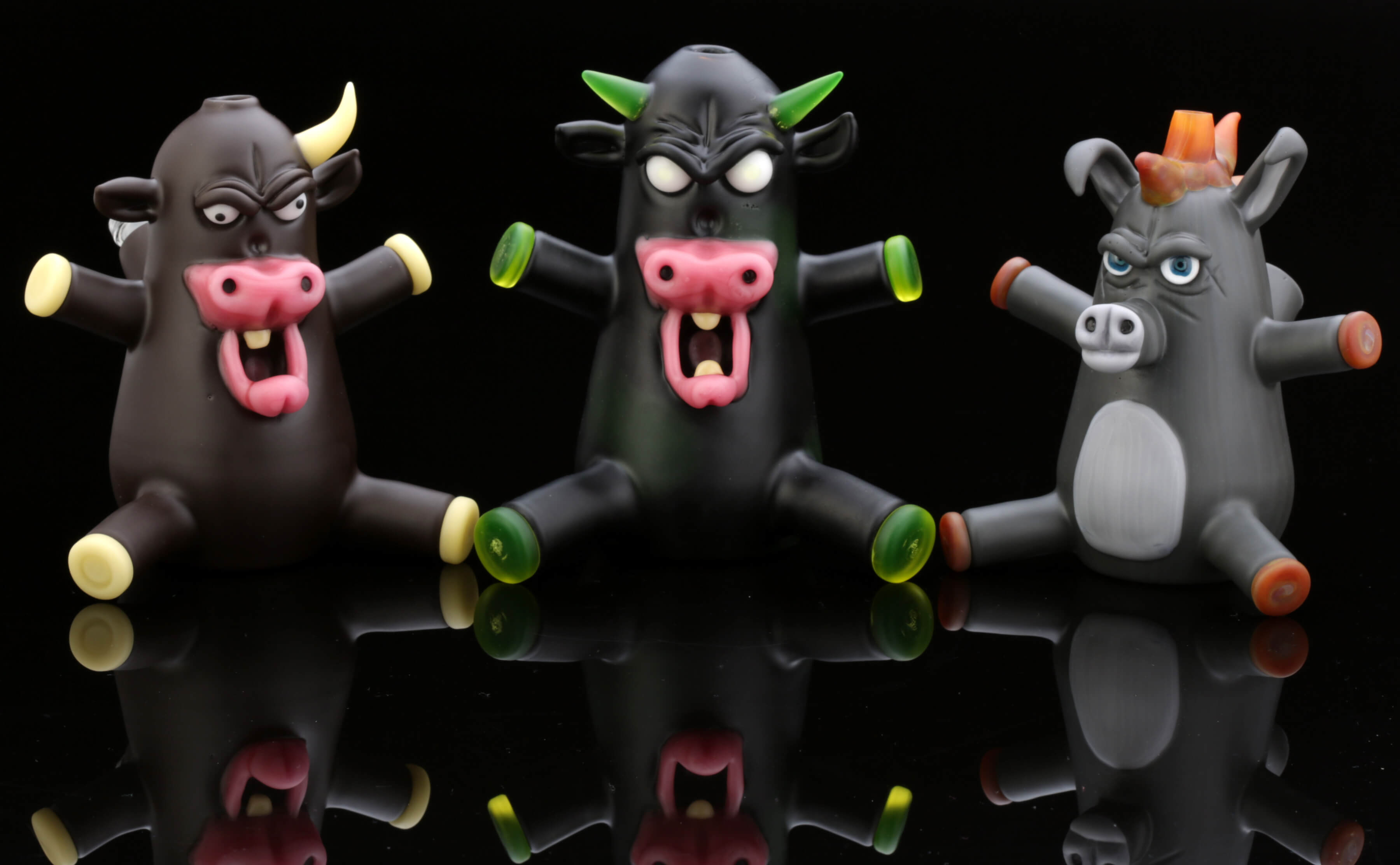
As fun as Muppets were to make, Morrison felt that the only way to make a lasting impression on the glass world was to bring his own characters to life. He chose cows as his subject. You might even call them Mad Cows as they all have a ‘tude.
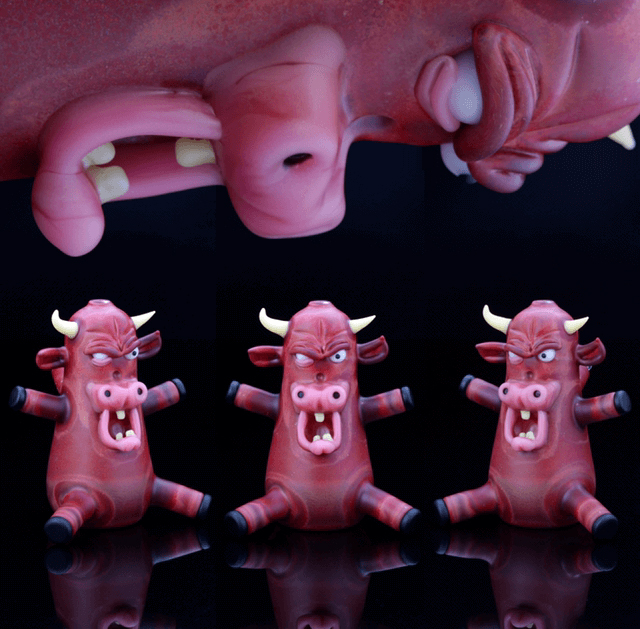
“Anger is an easy emotion to express. If you look at the animal characters in our trade, they all seem to be mad,” Morrison says. “People like seeing things with attitude and I give mine a lot of personality.”
Sandblasting gives Morrison’s pieces that plasticy toy appearance. Morrison doesn’t even care if people realize they’re made of glass and used for smoking weed.
“I want them to look like they’re just sculptures and aren’t functional until you turn them around and realize it’s a pipe,” he says.
“I see sculpting as more challenging than line work because with every piece, you’ve got to have a high level of creativity and inspiration,” Morrison adds.
Fans of Morrison’s work can check it out in person at smoke shops and glass galleries all over the country. You might even catch him competing at a live flame off, such as the CHAMPS Glass Games. To add one of Morrison’s headies to your collection will set you back a few grand, but if your wallet isn’t quite as fat, you can also find carb caps, bowl slides and even beads in his signature style.
“I’m happiest when I’m producing work. I love the freedom of my being a glass blower and there’s real fulfillment from creating a sculpture out of rods and tubes,” Morrison says.
“It’s weird because you open the kiln and you’re so excited and love what you’ve made, but within minutes you start analyzing all the flaws that most people will never notice. For somebody who’s known for clean, precise work, it’s ironical to hear Morrison say that all those little imperfections are what make each individual piece his own style.