By Darin Burt
It’s been said that creativity is about inventing, experimenting, growing, taking risks, breaking rules and having fun. Not only is that an apt description of artist Sean Dietrich, but it’s also the theme that pervades companies making their stake in the booming cannabis and smoke shop industries.
As one of the hardest working live painters, Dietrich has lashed his pigments, pen and egomaniacal perspective across the surfaces of thousands of canvasses during more than 4,500 appearances at clubs and festivals. At one point, fans logging onto DeviantArt could check out upwards of 700 pieces of his artwork which have been described as “weird, artistic and literary” fusing influences of Ralph Steadman, Tim Burton and Hunter S. Thompson.
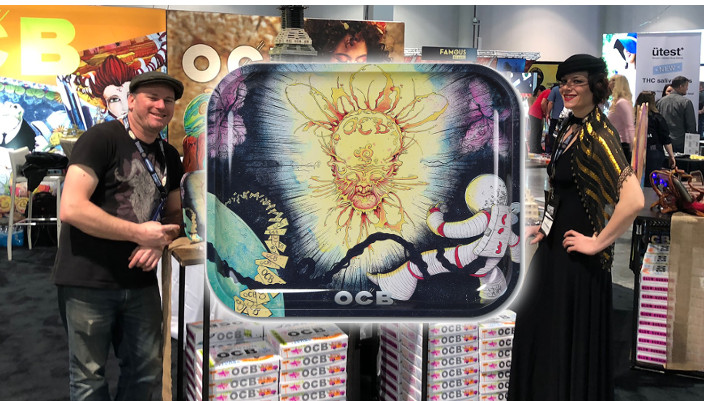
Within the cannabis Dietrich’s work is known best by those rolling a joint on an OCB rolling tray. Founded in 1917, OCB is one of the leading rolling paper manufacturers in the world, setting the standard for Premium and Organic Hemp papers. Embellished with Dietrich’s unique art, the OCB rolling trays are blazing the way for a new level of originality and inventiveness in product and packaging design.
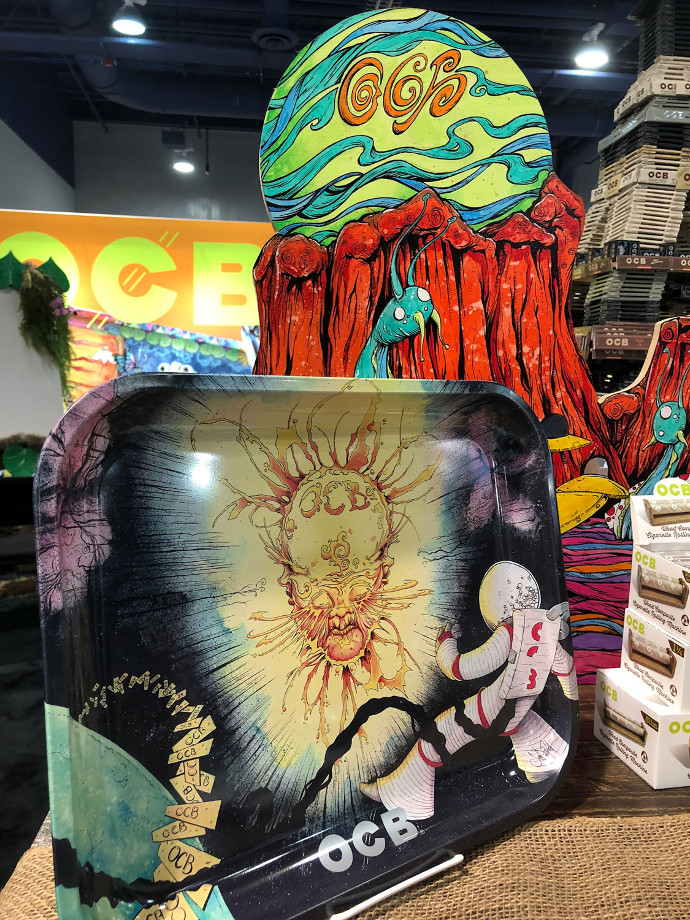
Take a close look at the artwork that Dietrich creates for OCB and you won’t find a pot leaf anywhere in the designs.
“As an artist, I create things that I think are really cool experiences; I really want to create ‘intelligent art’ because we’re passed the notion of the ‘stoner’ being a dumbass. With legalization happening, there are a lot more markets opening up and a much wider demographic of users,” Dietrich says.
“OCB puts out an amazing product,” he adds, “I’m grateful they want the artwork to be something that reflects hyper-creativity.”
Dietrich stepped into the art world at the age of 15, self-publishing a comic book about an Uzi-toting eight-year-old hunting a South American cannibal on the streets of New York. Later, as a professional artist, his work was the basis for graphic novels and twisted takes on classics including “Sleeping Beauty” and “Wizard of OZ.” Dietrich also turned his warped reality loose on video games, bringing to digital life, the character of Needles Kane AKA Sweet Tooth, the killer clown who drives an ice cream truck, in Sony PlayStation’s Twisted Metal game.
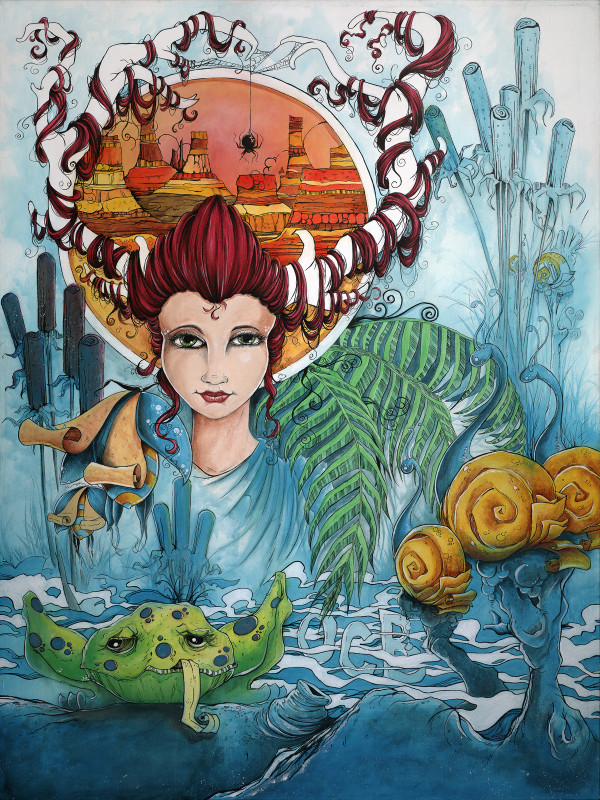
Each of Dietrich’s paintings tells a story. The “Stag Head Girl” a beautiful antler-haired deity surrounded by landscapes of desert canyons and lush rainforests, for example, ties in with the organic nature of OCB papers. Another piece, named, “Ring of Fire,” has a clear connection to lighting up, but the deeper idea plays off Dietrich’s fascination with ancient cultures. It features six unique locations in the Pacific Rim and the native peoples’ legends as to why their local volcanoes erupt.
“It might take me 10 hours to do a painting, but I’ve probably put 20 hours into the research,” Dietrich says.
“It can be a cool piece of art on a rolling tree or a poster on a wall, but it also gives you something more to think about and opens up discussions, which is extremely important in this day and age when everybody’s getting their information from social media,” he adds. “If I can create a piece of art that evokes conversation, and it just happens to be for a rolling paper company, it’s working in multiple ways.”
OCB rolling trays are not only cool to look at, they’re also collectable. The designs, which start as acrylic paintings on 4’x’3′ canvases, are primarily limited editions of no more than 5,000. If you run into at a live event or the CHAMPS Trade Show, he’ll even sign it for you.
Dietrich’s wife Rachel has artistic chops as well. She recently created a scale model of the Eiffel Tower from 2,000 OCB rolling paper booklets. Not only did the sculpture serve as a centerpiece in the OCB at CHAMPS, it continued the mission of making creativity a focus.
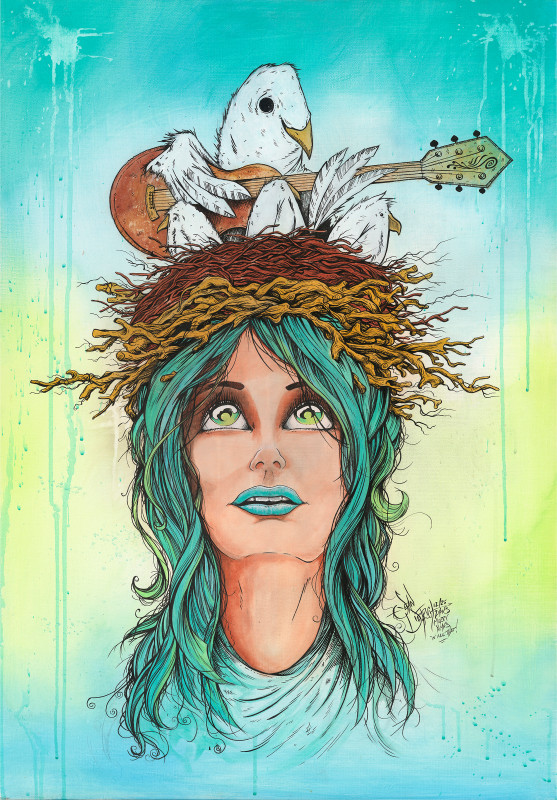
Following the trend of smoke shops creating galleries showcasing heady glass, Dietrich encourages adding other forms of artistic expression as well. OCB rolling trays are a perfect example — some shops have created wall art, similar to how they would with tapestries, which not only adds flair to the space, but also encourages more sales of the products.
Dietrich recently completed a tour of smoke shops where he painted OCB murals. He says it’s been outstanding the amount of support that shops have shown towards his art, and how they really appreciate that somebody is finally put some thought into some artwork for this industry other than Rick & Morty smoking a joint or some other pop culture parody.
“My reward in being involved with OCB is that they give me the opportunity to spread my wings as an artist and get my art out to many, many people,” Dietrich says.
“It’s amazing to work in an industry that’s brand new and to be able to inspire artists to go ahead and create some crazy shit,” he says. “There is an audience for them — and need for them in this industry.”
“Our industry may be super young and new, but it’s growing up — there are so many more people accepting of the industry, so let’s give them something outstandingly creative to support,” Dietrich challenges. “This industry can become a leader in creativity and be so much more than just about smoking.”