They say everything is bigger in Texas. When it comes to psychedelics research, that’s true. Thanks to a $16 billion budget surplus and a couple of persuasive advocates, the state has committed $50 million toward establishing an Ibogaine Research Center that will investigate how the drug can benefit mental and physical illnesses.
It’s the first step toward bringing the powerful psychotropic into the vaunted realm of accepted medicine. Through the investment, Texas hopes to defray the medical and societal costs that stem from addiction and trauma, and in the process figure out exactly how ibogaine affects such startling changes.
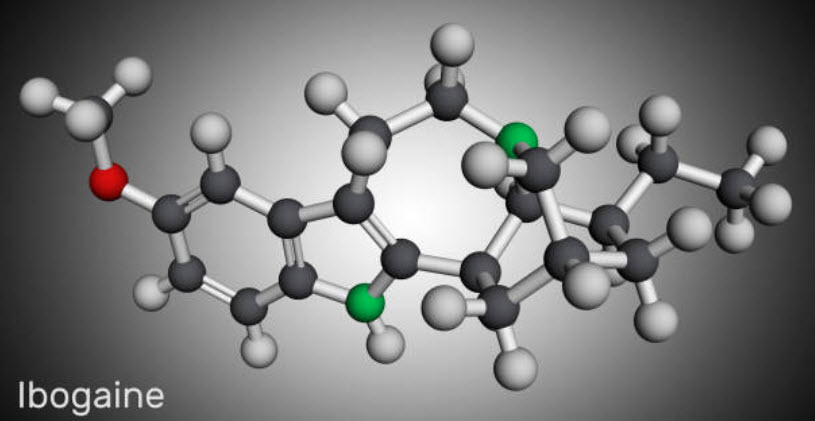
“Ibogaine is the most sophisticated molecule on the planet,” says Bryan Hubbard, CEO of Americans For Ibogaine and the architect of the Texas legislation. “Its capacity to produce regenerative effects on the brain is just now beginning to be understood, but science has recognized that they are profound. When you combine what it can do to resolve physiological substance dependency with what it can do to treat and heal traumatic brain injury — something that there’s nothing that exists to adequately address—we’re looking at a monumental opportunity to create some broad-based medical advancement for conditions that are stubbornly unresponsive to conventional synthetic pharmacology.”
While people in Gabon have used it for centuries, ibogaine has been resistant to Western acceptance because of its propensity to cause heart troubles and produce trips that last upwards of 30 hours. To combat these issues, medical workers in European and South American clinics outfit ibogaine patients with magnesium drips and heart monitors and encourage them to spend time mentally preparing themselves for the “work” that comes with an ibogaine experience.
Proponents point to these clinics as the way forward. In ibogaine, they see a wonder drug that dismantles addictions, tamps down PTSD, and heals traumatic brain injuries. Research out of Stanford University showed that a single ibogaine trip can reduce PTSD, depression, and anxiety in over 80 percent of users.
But Why Texas?
The Lone Star State seems like an unlikely launch point for ibogaine’s mainstream acceptance. The Texas Ibogaine Initiative feels like a combination of everything conservatives find suspicious: it’s pro-science, pro-government, pro-drug, and pro-mental health. But Hubbard, a longtime Republican from Kentucky, knows his audience. He pitched the Ibogaine Initiative as a way for the state to save money and support veterans through what he refers to as “God’s medicine.”
“I attribute the success to the unique nature of ibogaine,” Hubbard said. “You have a state that is very conservative, that is religious. And you have with ibogaine a very serious medication that can only be properly delivered in a clinically controlled medical setting. It does not come to the table with 1960s countercultural baggage. According to the individuals who are able to speak to its legitimacy, it has not only resolved physiological issues related to addiction and trauma, but it has spoken to their nature as a spiritual being who is more than just the material composition of our biology. That latter point has found broad-based resonance in Texas.”
But it was the veteran angle that moved former Texas Gov. Rick Perry, who served as Trump’s first Transportation Secretary, to join the cause. After meeting with servicemen who’d found success with the drug, Perry flew south to take the treatment himself. The experience changed him, and he publicly dedicated his life to its advocacy. Central to that work is removing the substance from the Schedule I list.

Speaking alongside Hubbard on the Joe Rogan Experience, Perry said: “There’s a host of countries around the world that allow for ibogaine to be used for clinical trials and for medical purposes. Yet we’re sitting here with 20-plus veterans a day killing themselves, yet we have a compound that the data shows, when used and appropriately overseen, can absolutely change lives and save lives. And for me to be able to know that and then still see the government say, ‘No. We’re not interested.’ It’s really frustrating.”
First Texas, Then the Country
The Texas Ibogaine Center may be the first high-dollar public investment in ibogaine, but it certainly
won’t be the last. Hubbard is spearheading similar initiatives in six other states, with more to come. But his recent success doesn’t guarantee a smooth path forward.
“The support for this is bipartisan, so the opposition is also going to be bipartisan,” Hubbard said. “The opposition is funded primarily by the opioid maintenance industry. That is one of the actors that monetizes sustained human misery and has no interest in the development of an alternative that could substantially impact their bottom line. The people who made the opioid epidemic are the people who also make its treatments. The companies that made OxyContin and all the others also make the treatment for them. And the politicians that are owned by those companies are the ones that will use their voice to oppose this.”
Even so, ibogaine has found plenty of supporters, such as Clayton Smith, a Silicon Valley executive and former U.S. Army infantry captain. After using ibogaine to treat his traumatic brain injury and PTSD, Smith became convinced he needed to share the experience with other veterans, so he partnered with the Mexican ibogaine clinic Beond to provide free services to veterans and their spouses.
“What Texas is doing is groundbreaking, and it’s incredible, and it’s so important—however, this medicine is not an antidepressant that you can take in a sterile laboratory. The experience is what makes this medicine as successful as it is. What we’re trying to do is to show the most efficacious therapeutic protocol, so that when Texas finally gets into clinical trials, we can show that this is how to maximize the benefits,” he said. “It’s not having people in a V.A. hospital with sterile white lab coats and who just walk in and give you some capsules and expect a miracle. It doesn’t work that way. You have to do the work, and that’s what the program we’re building is doing.”
Smith’s program, Beond Service, operates a nine-week course that spans work before and after the treatment in Mexico. It includes workshops, meditation, journaling, group therapy, and video lessons to help participants get the most from the experience.
“You don’t do this journey because someone else tells you that you have to. You have to want to do this work,” Smith said. “I’m a firm believer that the medicine meets you where you are, so if you’re willing to put 100% in, it’ll give you 100%. If you’re willing to put 10% in, it’ll give 10% back. It’s really important for people to know it’s not a magic pill. That’s what I say on every discovery call. It isn’t a chance to just take some capsules and see what happens. This is serious medicine.”