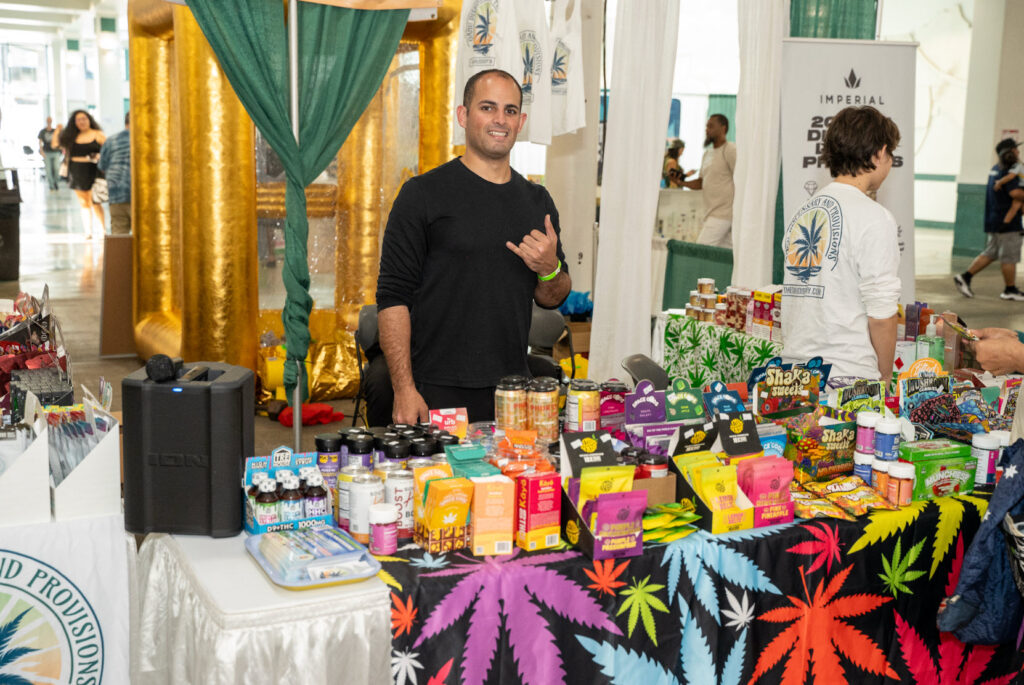
The officials came for Lance Alyas once before. In 2023, they caught him in a sting, seized his merchandise, and tossed him in jail. But just seven days later, after he invoked Hawaii’s version of a Freedom of Information Act request, the whole case fell apart. Alyas was released without bail, allowed to simply walk out the door.
Now, he’s advocating for freedom from Hawaii’s state officials once again. Only this time, it’s not just his own freedom. As the owner of Oahu’s top-rated smoke shops, he’s fighting for everyone’s right to sell hemp products in the Aloha State.
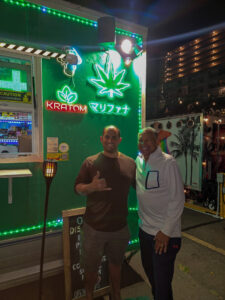 The battle started a short time ago, when the state’s Department of Health banned the sale of intoxicating hemp products like flower and pre-rolls. The crackdown shuttered several smoke shops across the island and caused others to quit stocking hemp products altogether. But Alyas had beaten the authorities before, and he was determined to try again. So he took legal recourse and sued the state.
His contention is simple. The 2018 Farm Bill made hemp products federally legal; the state’s regulatory agency has no right to supersede it.
It’s a case that’s relevant beyond the South Pacific. As the Nov. 12 deadline for a nationwide ban on intoxicating hemp products looms, Alyas’s lawsuit is an example of state resistance. He’s asking state judges to freeze the regulation until the ban either goes into effect or better solutions are found. If he’s successful, it’s a template that other states can use to fend off predatory agencies.
How it Started
Alyas’s roots run green. Although he owns four smoke shops in Hawaii, he cut his teeth in his family’s cannabis business in the Midwest. He left the Lower 48 to work at a friend’s mortgage company in Hawaii, where he quickly noticed a hole in the market that his cannabis expertise could fill.
 “My family opened one of the first dispensaries in Michigan, so we were kind of pioneers in Detroit,” he said. “I worked with my uncle for probably on and off about six or seven years. That’s kind of where I got all my experience and made my connections in the industry.”
Three years ago, he opened a hemp delivery service, an Uber Eats of Delta 8, and built up enough profit and know-how to open a brick-and-mortar location in May 2024. Then things got fast. He grew from one storefront to four locations across the island. His customers run the gamut from tourists hoping to mellow out a bit more and, interestingly, many of Hawaii’s sworn officers.
“We have some HPD shop with us. I’ve delivered personally to HPD. It was a barbecue, and I was actually kind of scared because I didn’t know what was happening, but [my customer] met us at the Hawaii Cannabis Expo, and I delivered to his house a couple of times. Then one day he has me make a delivery to a Honolulu Police Department barbecue,” he said, laughing. “He said he loves the products and uses them all the time. I know at least three or four officers who shop with us. And the ones that don’t shop with us heavily rely on us for camera footage. They’ve contacted me on multiple occasions to use it. We have a really good relationship with HPD out here.”
If you find it surprising that police would be among cannabis supporters in Hawaii, you need a vacation. The state has a long history of pro-weed sentiment. It was among the first in America to legalize medical use back in 2000. It seemed to be at the forefront of the recreational debate until the momentum ground to a halt under what Alyas calls “suspicious circumstances.”
He believes the restrictions were championed by medical dispensaries that want to cut the legs out from under their competition.
“It sucks because I come from the medical cannabis world. I worked at a dispensary for years. I understand trying to eliminate competition. I don’t like the way that they did it, but it’s also the state, too. The state did not write the best laws. It’s very unfriendly, even for medical dispensaries. I feel for them. They have to put a million-dollar, non-refundable deposit in escrow that they can’t ever take out, even if they sell their license. So they’re under very strict rules. I can feel for them. But also, they went about it in a shitty way.”
How it’s Going
The lawsuit, which was still being decided as of press time, has led to some unexpected revelations from Hawaiian regulators. The most significant is that the state’s argument hinges on retconning its interpretation of prior doctrine.
According to the state, items like hemp flower and pre-rolls were “always illegal.” It’s an audacious argument, considering the state’s history. The truth is that Hawaii passed a smokable hemp ban in 2020, but then repealed that law through the legislature in 2023. Why it’s illegal now is that the DOH quietly reinstated the ban on its own, without the will of the people or their representatives.
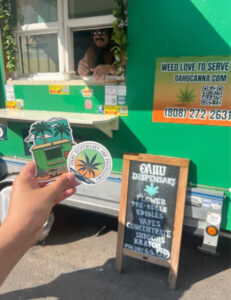 As anyone lucky enough to visit the islands recently can attest, cannabis use in Hawaii is widespread. Although it’s only legal medically, it’s hard to spend long in any public space without catching a whiff of the familiar scent.
According to a report commissioned by the state’s Department of Health, people in Hawaii spend, on average, between $16.5 million and $32 million on weed per month. That includes residents and tourists shopping in both legal and illegal markets. For hemp products like the ones Alyas is fighting to save, the total is an additional $6.8 million per month. Hemp and cannabis are popular pastimes there, not niche interests.
And most of the laws reflect that. Cannabis has been decriminalized, and the punishment for possession is light. Those caught with less than three grams face only a civil penalty. The most recent polling available shows that 58% of residents would vote in favor of legalization, and the state’s governor has been consistent that he would sign any legalizing measure the state’s congress advances to his desk.
Alyas is fighting against the government and for the people. If he succeeds, not only will people in Hawaii have hemp. They’ll be closer to free, he said.
“It’s government overreach, making laws that are not fair and it’s affecting people negatively. I want to fight against it and make sure that the politicians are doing what we paid them to do, not screw us for payment,” he said. “I just want a fair market,” he said. “Let’s play the game and let’s see who’s truly the best.”
Want to see how changing cannabis laws can affect an entire market? Explore what’s driving Michigan’s declining cannabis revenue, including new taxes, rising costs, and other challenges reshaping the state’s industry. Click HERE to see why Michigan experienced a 16% decline in revenue in just one month!