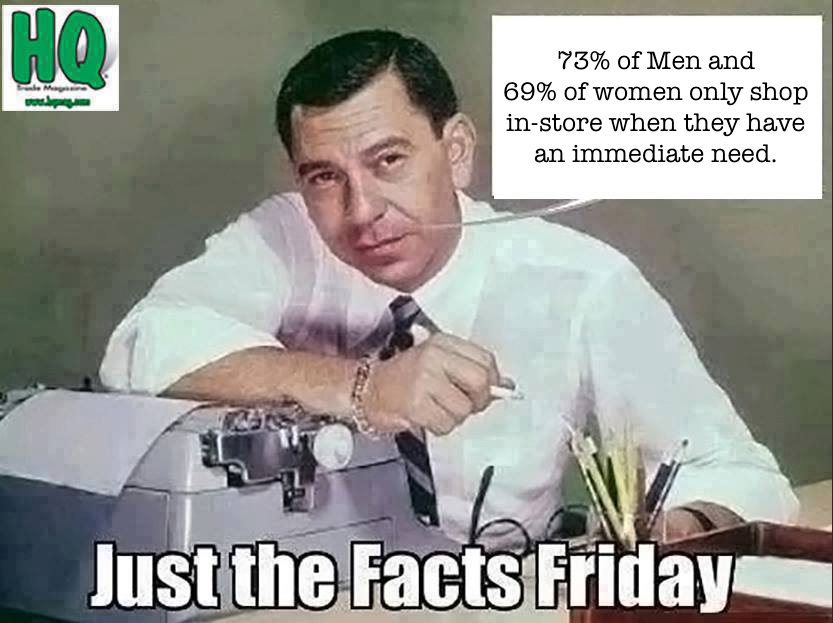
According to a State of Consumer Spending report by First Insight, 73 percent of men and 69 percent of women respondents said that they only shop in-store when they have a need for something.
The data points to the fact that retailers, to be most effective and capture greater sales, need to place greater priority on the overall shopping experience. To attract consumers into the store beyond buying necessities, retailers must focus on pricing, incentives and customer experience.
The internet is full of deals. Your local smoke shop can effectively win the sale by implementing price matching. The practice has proven successful, especially in big box stores. In fact, eMarketer reports that retailers listed price matching as the second-most successful promotional technique.
Do your customers one better than the competition — don’t make them find the price match; bring the price match to them. When shoppers know they can depend on you to deliver the best price (and that you’ve already done the research for them), they don’t need to go looking. This builds loyalty, as well as sales.
Google uses your personal data to recommend sites that are most relevant to your need. Word of mouth is your real world “cookie” and according to National Retail Solutions, which has created POS systems and merchant processing for smoke shops, customer referrals cost up to 90 percent less than traditional forms of advertising.
Offering incentives for referrals is an outstanding way to build your customer base and gain fresh, cost-effective leads. They’re also relatively straightforward, as their premise relies on basic word-of-mouth principles — a customer recommends your business or product to someone else, and you receive a notice of the recommendation. In return, the referrer earns a reward for their actions.
The one advantage that traditional retailers offer over online shopping is a personalized shopping experience. As people have become more technologically focused, they have been left with a shortage of interpersonal contact. For you, the traditional smoke shop owner, this is more than just good news — it is a boon for business.
Online consumers aren’t buying products, they’re buying solutions to their problems. The internet can give you information about anything — that’s a disadvantage as well as an advantage. There’s so much information that its hard to tell what is right, what is wrong, and what is just downright misleading.
As a face-to-face business, you can improve customer experience by educating your staff about the products you sell so they become a trusted resource in the minds of customers. Also, take advantage of your website to include answers to frequently asked questions and content that relates to your products and your ideal customers.