
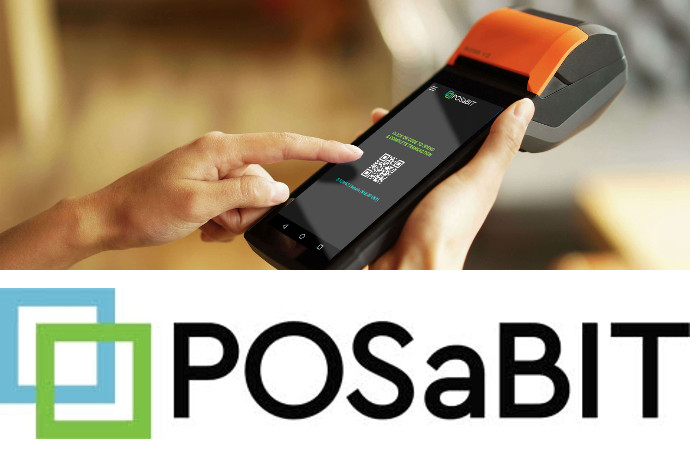
A POS Designed for the Cannabis Industry

Tired of being dumped by your merchant service provider simply because you sell CBD and cannabis-related products. POSaBit has your back. The Washington State based financial technology company delivering unique blockchain enabled payment processing and point of sale (POS) systems for cash-only businesses with a focus on the cannabis industry, announced the rollout of its fully compliant mobile payments system for dispensaries across states. POSaBIT’s new handheld device allows for compliant processing of mobile delivery that could be extended across the 25-plus states that currently allow for delivery to medical and, in some cases, recreational cannabis consumers

“Delivery is one of the fastest growing segments of the cannabis industry and an area that many dispensaries are moving toward,” said Ryan Hamlin, POSaBIT CEO and co-founder. “Our fully compliant solution allows businesses to feature a state-of-the-art retail customer experience for both in-store and delivery, while also providing in-depth business analytics and increased revenues for businesses.”

The new payments system moves from requiring an iPad, printer, scanner, and debit terminal to only needing the device and debit terminal. POSaBIT’s all-in-one handheld device includes an Android device, printer and scanner that seamlessly allows dispensaries and affiliated delivery drivers to scan the consumer ID, process the purchase of the product, add a tip for the delivery driver, and print the receipt for the customer.

This easily installed, mobile-operated system will replace POSaBIT’s existing payments solution used in stores and will be rolled out to existing and new customers over the next several months. At half the cost of the previous hardware solution, the new mobile hardware improves businesses’ ability to implement the solution and quickly begin offering it to consumers.

POSaBIT already manages millions of transactions for over 120 dispensaries across Washington, California, Nevada, Colorado, Arizona and Oklahoma.


Recent Articles

Even without the representation and recognition they deserve, women have always been at the center of the cannabis movement.
There are objects Americans buy because they need them, and objects Americans buy because they let them be a certain kind of person. A perfectly functional version exists, usually for a fraction of the price. But the other version comes with a name, a story, and a reason to pay extra.
Walk into any warehouse rave, desert gathering, or rooftop after-hours in 2026, and you’ll feel it: the psychedelic underground is back, louder, weirder, and far more self-aware than its ‘60s predecessor ever imagined.
In 62 BC, Julius Caesar announced his plan to divorce his second wife, Pompeia. She had been involved in an ancient Roman sex scandal, accused of flirting with another man during a women-only religious event.
ile Mike Wittenberg sat in a Dominican Republic prison, a thought occurred to him. “I could appreciate flushing the toilet,” he said. “When you’re in a third-world jail without running water 23.5 hours a day, you learn to appreciate the little things.”
When it comes to marketing, cannabis is different from every other consumer good available today. If sales start to dip in traditional retail, you can simply increase ad spending. However, with companies like Google, Meta, and even traditional broadcasters placing strict bans or severe limitations on cannabis advertising, the standard “pay-to-play” system just doesn’t work.
It feels impossible sometimes to escape the more ridiculousness aspects of pop culture—like pickleball, whatever a Labubu is, and the inevitable media frenzy surrounding Taylor Swift and Travis Kelce's upcoming wedding. Thankfully, there’s at least one trend that’s still on the rise that I can get behind, which is kratom.
When Adelia Carrillo (Fakhri) and Parisa Rad first sat down for brunch in Phoenix, AZ, with a few other women in the cannabis industry, they had no idea how that moment would change the trajectory of their lives. “The energy in that room was transformative,” Adelia says.