
“Juul has ignored the law.” So says acting FDA Commissioner Ned Sharpless, M.D. in strong statement to the vaping juggernaut.
The Food and Drug Administration has put Juul on notice with a pair of letters calling out the company for misleading statements about its products and ongoing targeting of teens.
In the letter, issued September 9, the FDA alleged that Juul marketed its products as “modified risk tobacco products without an appropriate FDA order in effect.”
Among the accusations—the FDA claims despite Juul’s recent compliance to no longer promote its products on social media, and to cease selling e-flavored cigarettes in retail stores, the company did indeed market its products to kids as “totally safe” and a “safer alternative than smoking cigarettes.”
During congressional hearings in July, teens testified that a representative for Juul visited a ninth-grade classroom in April 2018 and described the company’s vape products as “totally safe” while at the same time claiming that the company didn’t want them as customers, seemingly as a manipulation tactic. Another teen quoted in the warning letter testified that he was told by the rep that he “should mention JUUL to his [nicotine-addicted] friend…because that’s a safer alternative than smoking cigarettes, and it would be better for the kid to use.”
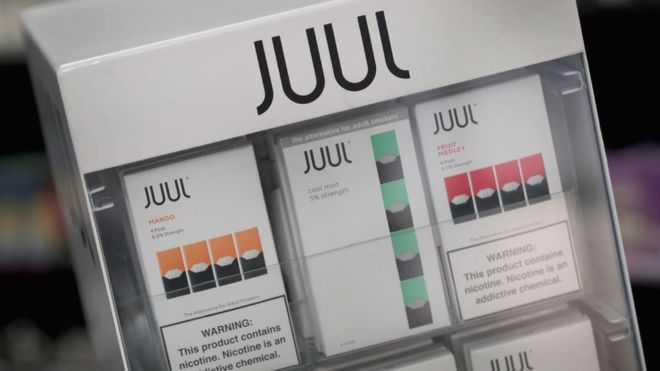
According to Yahoo Finance, the FDA told Juul that parts of its “Make the Switch” marketing campaign, that encourages smokers to use its device, convey that they’re safer than cigarettes. The agency asked Juul for any consumer-perception studies related to whether Juul’s representation implies the products are smoking-cessation devices. The FDA hasn’t approved any of the company’s products as smoking-cessation tools.
“Switching is not another word for cessation — they mean to very different things,” countered Juul spokesman Ted Kwong. “Switching involves continuing to consume nicotine, but from a different device, while cessation is about getting users to eliminate their nicotine consumption altogether. We are a switching product.”
Just a daunting in the eyes of the FDA, in a letter by CEO Kevin Burns on the company’s website, that claimed its “simple and convenient system incorporates temperature regulation to heat nicotine liquid and deliver smokers the satisfaction that they want without the combustion and the harm associated with it.”
FDA investigators are demanding a review of Juul’s business practices, telling the company to turn over documents on its marketing, and educational programs. In addition, the agency insisted that Juul explain why it uses nicotine-salt e-liquids and a high concentration of nicotine in its Juul pods, which officials said could increase the products’ addictiveness.