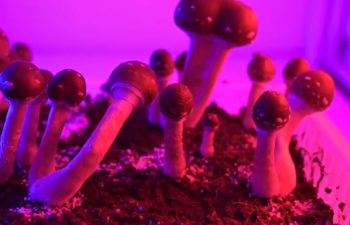
Mission looks at zero gravity effects on cannabis strain development
Front Range Biosciences, an agricultural technology company focused on breeding and nursery production of new plant varieties and seeds for the hemp and coffee industries, is giving new meaning to getting “spacey.”
Front Range Biosciences announced plans to send cannabis to the International Space Station. No, it’s not to get astronauts high. Instead, the mission will transport plant cultures to space to examine zero gravity’s effects on the plants’ metabolic pathways.
The experiment, being targeted for the ISS aboard the SpaceX CRS-20 cargo flight scheduled for March 2020, will look at how plant cells undergo gene expression changes or genetic mutations while in space. Front Range Biosciences is providing the plant cultures, while SpaceCells will provide expertise, management and funding for the project. BioServe has flight qualified hardware to house the plant cultures and facilities on board the International Space Station (ISS) to maintain the cultures under controlled conditions. BioServe will manifest and integrate the experiment and will work with the NASA astronauts to transfer experiment hardware to BioServe’s incubator on board ISS and execute the experiment.
Up to 480 plant cell cultures will reside in a space-made incubator that will regulate temperature in their temporary home aboard the ISS for about 30 days. The environmental conditions for the cultures will be monitored remotely from BioServe’s payload operations center at the University of Colorado, Boulder. After about a month, the cells will be returned to Earth, where researchers at Front Range Biosciences will examine the plant samples and evaluate their RNA to determine how microgravity and space radiation exposure altered the plants gene expression.
Ultimately, the results of the research could help growers and scientists identify new varieties or chemical expressions in the plant. This will also allow scientists to better understand how plants manage the stress of space travel and set the stage for a whole new area of research for the company and the industry.
With the advent of private space travel, an area of space research has emerged called “new space”, where researchers are studying the effects of microgravity on a variety of organisms, including everything from disease cells to various plant varieties. SpaceCells is on the forefront of the commercialization of that research.
“We’ve been fortunate to be a leader in the new space industry and we’re excited to explore these amazing opportunities with the team at Front Range Biosciences and BioServe,” said Peter McCullagh, CEO of SpaceCells. “These are big ideas we’re pursuing and there’s a massive opportunity to bring to market new Chemotypes, as well as Plants that can better adapt to drought and cold conditions. We expect to prove through these and other missions that we can adapt the food supply to climate change.”
Because of rising temperatures due to climate change, there are many environments on Earth that are unable to support crops that once thrived in those regions. Learning how plants respond to novel environments – such as space – can help companies like Front Range Biosciences breed crops to thrive in locations where they have not performed successfully in the past.
The crew at Front Range Biosciences, SpaceCells USA Inc. and BioServe do not believe this will be the sole mission. Instead, the group plans on conducting a series of investigations that can boost the productivity and viability of terrestrial crops and plants.
“We envision this to be the first of many experiments together,” said Louis Stodieck, Chief Scientist of BioServe Space Technologies at the University of Colorado, Boulder. “In the future, we plan for the crew to harvest and preserve the plants at different points in their grow-cycle so we can analyze which metabolic pathways are turned on and turned off. This is a fascinating area of study that has considerable potential.”